
New Jersey Home Buying Process Step-by-Step: From Pre-Approval to Closing
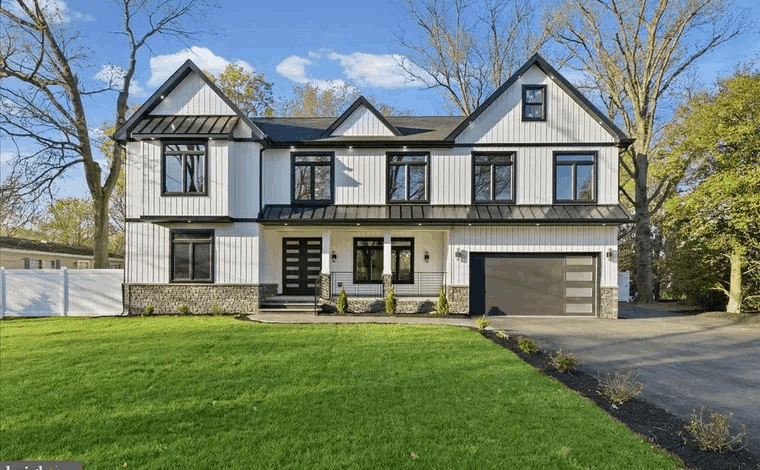
New Jersey Home Buying Process Step-by-Step: From Pre-Approval to Closing
Buying a home in New Jersey is one of the most significant financial decisions most people will ever make, and if you're doing it for the first time or even if you've bought before the process can feel overwhelming without the right guidance. The good news is that when you understand each step of the New Jersey home buying process, it becomes far less intimidating and far more manageable.
Chris Burns guides buyers through every step of the process in Sussex County and throughout Northern New Jersey. This complete step-by-step guide is designed to help you understand exactly what happens between your first conversation with a lender and the moment you receive your keys at closing.
Step 1: Assess Your Financial Readiness
Before you search for a single listing, you need an honest picture of your finances. This means reviewing your credit score, calculating your debt-to-income ratio, and understanding how much cash you have available for a down payment and closing costs.
In New Jersey, closing costs typically range from 2% to 5% of the purchase price, in addition to your down payment. For a $450,000 home a common price point in Sussex County that could mean $9,000 to $22,500 in closing costs on top of whatever you're putting down. Knowing this upfront prevents unpleasant surprises later in the process.
The Consumer Financial Protection Bureau offers excellent free resources for first-time home buyers to assess financial readiness before approaching a lender.
Step 2: Get Pre-Approved for a Mortgage
Pre-approval is not the same as pre-qualification, and the difference matters. Pre-qualification is an informal estimate based on self-reported information. Pre-approval is a formal review of your income documentation, tax returns, employment verification, and credit history by a lender who then commits to a specific loan amount in writing.
Sellers in today's Northern New Jersey market take pre-approval letters seriously. In many cases, they will not entertain an offer that isn't accompanied by one. Getting pre-approved before you start touring homes also tells you exactly what price range to search within, preventing you from falling in love with a home you can't finance.
Choose a lender you trust ideally one with experience in New Jersey transactions and shop at least two to three lenders to compare interest rates and loan products.
Step 3: Choose the Right Real Estate Agent
Your agent is your advocate, your market analyst, your negotiator, and your guide through every phase of the transaction. In a market as nuanced as Sussex County, local expertise is not optional, it's essential.
Chris Burns at Keller Williams Integrity has 16 years of residential experience in Northern New Jersey and has an intimate knowledge of the Sussex County and Morris County markets that comes only from living and working here for a lifetime. That kind of local knowledge affects every part of the search, from identifying fairly priced homes to understanding which neighborhoods are appreciating and which need caution.
Step 4: Define What You're Looking For
Before you start touring homes, spend time clearly defining your priorities. How many bedrooms and bathrooms do you need? Is a garage essential? Do you want land? Are you open to a fixer-upper or do you need move-in ready? How important is proximity to specific schools or commuting routes?
Having clarity on your "must-haves" versus your "nice-to-haves" makes the search process more efficient and helps your agent target the right listings from the start. In Sussex County, the inventory varies significantly between lake communities, rural properties, and traditional suburban neighborhoods knowing your priorities helps narrow this down quickly.
Step 5: Start Your Home Search and Tour Properties
Once your pre-approval is in hand and your criteria are defined, the active search begins. Your agent will set up a customized search on the Multiple Listing Service (MLS) and alert you to new listings that match your parameters as they come to market.
Tour homes with intention. Don't just look at the cosmetics, pay attention to the layout, the condition of mechanical systems, the age of the roof, and the overall structural integrity. In older Sussex County homes, particularly those near lakes or in rural areas, water management, well and septic systems, and insulation are all factors worth understanding during initial tours.
Step 6: Make a Competitive Offer
When you find the right home, speed and strategy matter. Your agent will prepare a Comparative Market Analysis to help you determine a fair offer price based on recent sales of similar homes in the area. In a competitive market, pricing your offer correctly from the start is far more effective than starting low and negotiating up.
Your offer will include the purchase price, your proposed closing date, earnest money deposit, contingencies (inspection, financing, appraisal), and any personal property you'd like included. In New Jersey, the attorney review period begins after both parties sign the contract. Both buyer and seller have three business days to have the contract reviewed by their respective attorneys and to cancel or propose modifications.
Step 7: Navigate Attorney Review and Inspections
New Jersey is one of the few states that mandates an attorney review period as a standard part of every residential real estate transaction. According to the New Jersey State Bar Association, both buyer and seller should retain attorneys for this process. This three-day review period can be extended by mutual agreement until attorneys on both sides approve the contract language.
After attorney review closes, the home inspection is typically your next priority. A licensed New Jersey home inspector will evaluate the property's structural components, roof, foundation, plumbing, electrical systems, HVAC, and more. In Sussex County, inspections should also cover well water testing, septic inspection, radon testing, and mold if there is any visible concern.
Step 8: Appraisal and Mortgage Commitment
Your lender will order an independent appraisal to confirm the home's value supports the purchase price. If the home appraises at or above the purchase price, you move forward. If it appraises below, you have options: negotiate the price down, make up the difference in cash, or walk away if you have an appraisal contingency.
Once the appraisal is complete and satisfactory, your lender will issue a formal mortgage commitment letter, which is a critical milestone in the transaction.
Step 9: Final Walk-Through
Shortly before closing typically within 24 to 48 hours you'll do a final walk-through of the property to confirm it's in the same condition as when you made your offer, that any agreed-upon repairs have been completed, and that no damage has occurred since your inspection.
Step 10: Closing Day
Closing in New Jersey is conducted at a title company or attorney's office. You'll sign a substantial amount of paperwork, including your loan documents, the deed, and the settlement statement. You'll bring a cashier's check or arrange a wire transfer for your down payment and closing costs. Once all documents are signed and funds are disbursed, the keys are yours.
The entire process from accepted offer to closing in New Jersey typically takes 45 to 60 days, though it can vary.
Conclusion
Understanding the New Jersey home buying process from start to finish makes it less stressful and more successful. Every step requires attention, and having the right team of a trusted lender, an experienced attorney, and a knowledgeable local agent makes all the difference. If you're ready to start your home buying journey in Sussex County or Northern NJ, connect with Chris Burns today.
Frequently Asked Questions
How long does it take to buy a house in New Jersey?
From accepted offer to closing, the typical timeline in NJ is 45 to 60 days. The pre-approval and search phases add additional time before that.
Is attorney review mandatory in New Jersey?
Yes. New Jersey requires a three-business-day attorney review period after both parties sign a residential real estate contract.
How much do I need for a down payment in NJ?
It depends on your loan type. Conventional loans may require 3% – 20%, FHA loans require 3.5%, and VA or USDA loans may require zero down for qualified buyers.
What happens at a New Jersey real estate closing?
You sign loan documents, transfer funds, and receive the deed and keys. It typically takes 1–2 hours.
Do I need a real estate agent to buy a home in New Jersey?
While not legally required, working with an experienced local agent protects your interests and navigates the complexities of NJ real estate transactions.
Categories
Recent Posts
GET MORE INFORMATION